


Figma’s long-awaited public debut on Thursday didn’t just mark a major milestone for the design software company; it also delivered one of the biggest paydays in venture capital history. The company opened trading at $33 and ended the day at $115.50, pushing its valuation to around $65 billion.
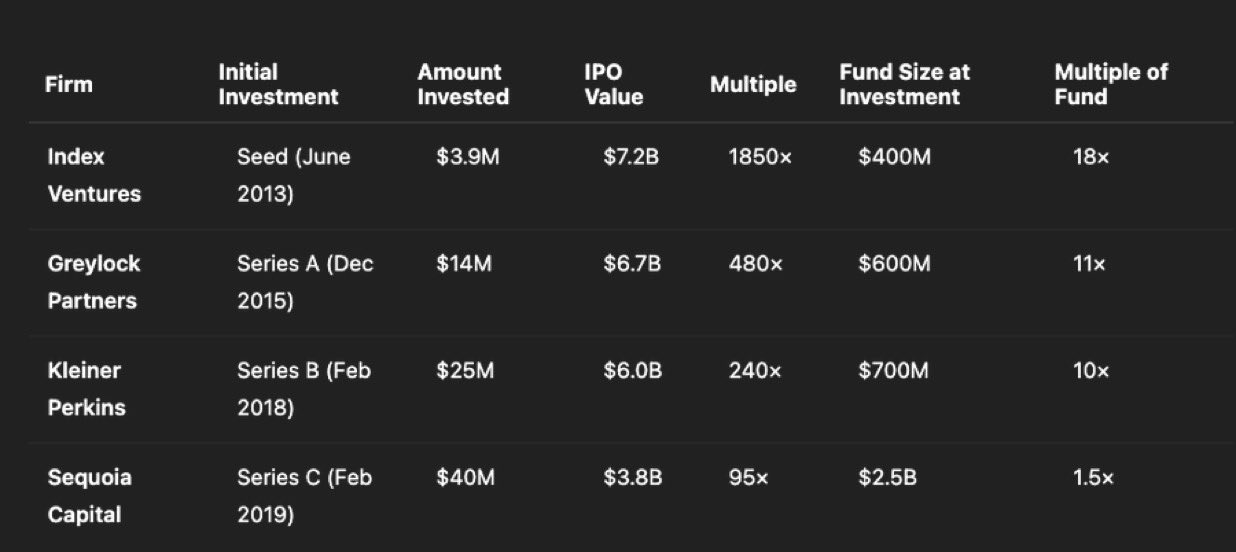
Index Ventures, one of Figma’s earliest backers, invested $3.9 million in 2013 when the company’s shares were priced at nine cents. That position has since grown into a $7.2 billion stake, representing an approximate 1,850x return. Greylock Partners and Sequoia Capital also hold large positions, 10.3% and 7.9%, respectively, now worth roughly $6.75 billion and $5.2 billion. In total, Figma’s three largest investors control around $24 billion in equity.
The IPO arrives less than two years after Adobe’s $20 billion acquisition attempt was scrapped following regulatory pushback. Ironically, what Adobe couldn’t buy, the public markets have now valued at more than triple the original offer. The strong debut reflects not only market confidence in Figma’s core design tools but also belief in its ability to expand into adjacent spaces like developer collaboration and productivity software.
Figma’s IPO comes at a time when the market has seen few venture-backed tech listings. Over the past two years, many late-stage startups have stayed private, waiting out valuation cuts and choppy public markets. The strong debut of $FIG could signal a turning point, especially for SaaS companies with solid growth, loyal users, and lean operations. For now, Figma serves as a rare but powerful example of patient venture investing, clear product-market alignment, and the kind of exit that can define a fund’s success.
Written by: Gannon Breslin